Why Realistic Horror Hits Harder Than Monsters
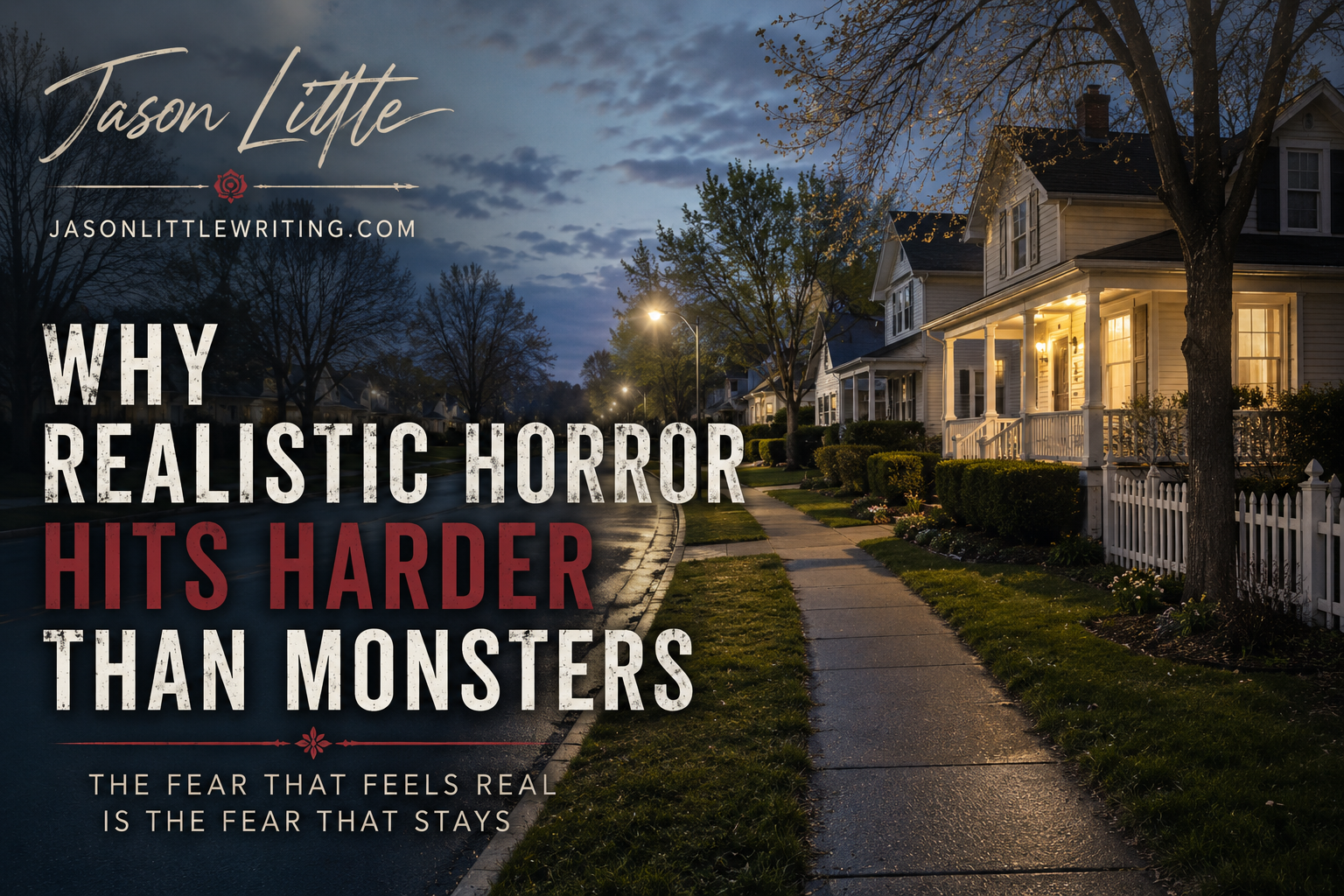
What scares you the most? The creature under your bed? Or the accident in real life waiting to happen?
When most people think of horror, they think of monsters.
Vampires.
Werewolves.
Ghosts.
Demons.
And don't get me wrong. I enjoy a good monster story as much as the next horror fan. But as both a reader and a writer, I've noticed something over the years.
The stories that stick with me? They’re not the ones about creatures lurking in the dark.
They're the ones that feel like they could actually happen.
That's why realistic horror hits harder than monsters.
The Fear That Follows You Home
Most of us know vampires aren't real.
At least, I hope we do.
The same goes for werewolves, zombies, and ancient gods sleeping beneath the ocean.
We enjoy those stories because they allow us to experience fear from a safe distance. We know we're dealing with fantasy.
Realistic horror removes that safety net.
A serial killer could be real.
A stalker could be real.
A home invasion could be real.
A brain tumor that changes someone's personality could be real.
The moment a story becomes plausible, our brains stop treating it like entertainment and start treating it like a possibility.
That's when the discomfort begins.
Why "The Growth" Disturbs Me More Than Any Monster
One of my recent stories, The Growth, follows a man named Melvin whose brain tumor causes everything he loves to become something he hates.
The idea isn't scary because of what the tumor physically does.
It's scary because brain tumors already affect personality, memory, behavior, and emotional regulation in the real world.
A vampire turning someone into a monster is fiction.
A disease altering who you are as a person isn't.
One feels impossible.
The other feels terrifyingly close.
Stephen King's Most Terrifying Villains Aren't Monsters
Stephen King has written plenty of supernatural stories.
He's also created some of the most frightening human villains in horror.
Annie Wilkes from Misery doesn't have supernatural powers.
She's simply obsessed.
And obsession is something we've all encountered in one form or another.
That's what makes her terrifying.
You can't stop Annie Wilkes with a silver bullet.
You can't perform an exorcism.
You can't outrun a curse.
You have to deal with a human being who has become dangerously unhinged.
Shirley Jackson Understood Human Fear
One of the reasons Shirley Jackson's work remains influential decades later is that she understood people.
In The Lottery, the horror isn't a monster.
It's a community.
Ordinary people doing something terrible because it's what they've always done.
The story continues to resonate because history is full of examples of ordinary people participating in extraordinary cruelty.
That's a much harder truth to confront than a ghost.
Realistic Horror Exploits Existing Fears
The most effective horror often taps into fears readers already carry.
Fear of losing a loved one.
Fear of illness.
Fear of aging.
Fear of being forgotten.
Fear of losing control.
My story Tethered explores the fear that death might not actually bring peace.
The horror isn't a monster attacking the protagonist.
The horror is the possibility that the protagonist's assumptions about death were wrong.
That's a fear many people already have.
The story simply shines a flashlight on it.
The Monster Is Usually a Metaphor Anyway
Even when monsters appear in horror fiction, they're often standing in for something real.
Vampires frequently represent predatory relationships.
Zombies can symbolize consumerism, disease, or societal collapse.
Werewolves often represent losing control of one's darker impulses.
The monster isn't necessarily what scares us.
It's what the monster represents.
That's why the most memorable horror stories aren't really about monsters at all.
They're about people.
Why I Keep Coming Back to Realistic Horror
As a writer, I've discovered that realistic horror gives me fewer places to hide.
If I'm writing about a demon, readers can dismiss it.
If I'm writing about grief, obsession, loneliness, or mental deterioration, readers recognize those things immediately.
They've experienced them.
Or they know someone who has.
That's where the real power of horror lives.
Not in sharp teeth.
Not in claws.
Not in things that go bump in the night.
But in the uncomfortable realization that the scariest things in life already exist.
And sometimes they look exactly like us.
Final Thoughts
Monsters will always have a place in horror fiction.
I love them.
I'll continue reading about them.
I'll probably continue writing about them.
But the stories that linger in my mind aren't usually the ones involving creatures from another world.
They're the ones that force me to look at this one.
Because at the end of the day, realistic horror asks a much more unsettling question than any monster ever could:
What if this actually happened?
And that's a question that's a lot harder to ignore.