How Real Life Anxiety Fuels Fiction
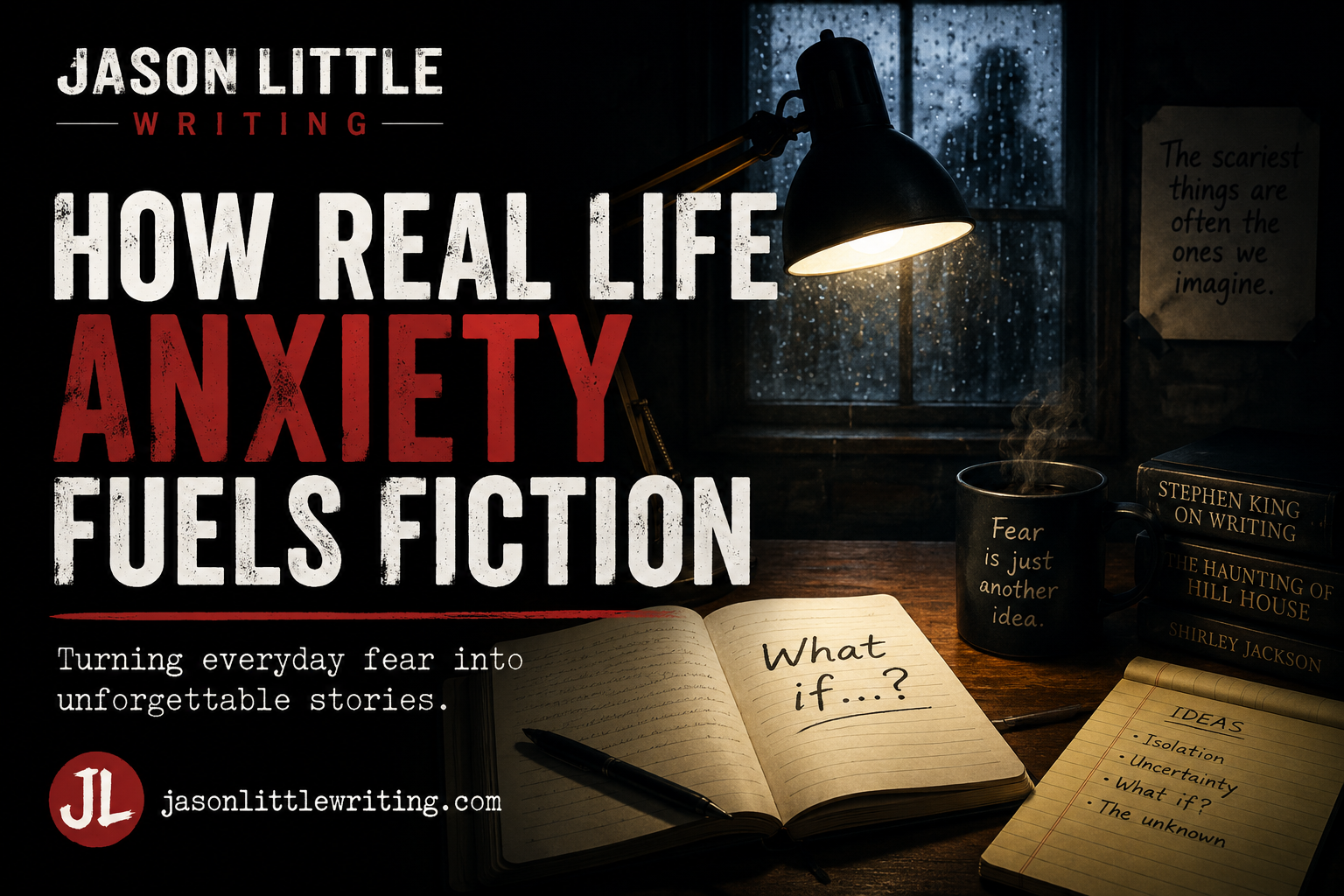
If you've ever stayed awake replaying a conversation from earlier in the day, imagined every possible outcome before making an important decision, or felt your stomach knot over something that hadn't even happened yet, you've already experienced one of the most powerful tools a horror writer can possess.
Anxiety isn't pleasant. I wouldn't wish it on anyone. At the same time, it has shaped some of the most memorable scenes I've written because it forces me to ask uncomfortable questions.
What if?
That simple question has launched countless novels, films, and short stories. It also happens to be the language anxiety speaks fluently.
Anxiety Creates Questions That Refuse to Stay Quiet
When I'm writing, I rarely begin with monsters or ghosts. I usually begin with a fear.
What if someone disappeared without a trace?
What if your own memories couldn't be trusted?
What if you walked into a room and realized something had changed, but nobody else noticed?
Those questions don't come from nowhere. They're rooted in everyday worries that most people have experienced in one form or another. Fiction simply turns the volume up until ordinary concern becomes extraordinary terror.
Readers recognize those emotions because they've lived them themselves. They may never encounter a haunted house, but they understand uncertainty.
The Brain Wants to Fill in the Blanks
One reason anxiety works so well in fiction is because our brains dislike unanswered questions. When information is missing, we naturally begin filling in the gaps ourselves.
That's one reason suspense often feels more frightening than outright horror. The audience starts creating possibilities that are often worse than anything the author eventually reveals.
Psychologist Daniel Kahneman explored how our minds rely on assumptions and incomplete information in Thinking, Fast and Slow. His work helps explain why readers quickly jump to conclusions when details are intentionally withheld.
My Own Writing Begins With Unease
Many of my Flash Frights don't start with elaborate plots. They begin with a feeling.
Sometimes it's walking into an empty parking garage at night.
Sometimes it's hearing footsteps that seem just a little too close.
Sometimes it's wondering what might be hiding beneath something completely ordinary.
When I wrote Growth, I wasn't interested in creating another monster story. I wanted readers to feel trapped by something that refused to stop spreading. The horror came from helplessness long before the threat fully revealed itself.
I've found that readers remember emotions far longer than jump scares.
Stephen King Understands Everyday Fear
Stephen King has often discussed how ordinary fears become extraordinary stories. Childhood fears, family struggles, illness, addiction, grief, and isolation frequently become the foundation beneath his supernatural elements.
A haunted hotel is memorable.
A father slowly losing himself while trapped with his family is unforgettable.
King has explained that horror often succeeds because it reflects genuine human fears before introducing anything supernatural.
Shirley Jackson Made Anxiety Feel Personal
Few writers captured quiet anxiety as effectively as Shirley Jackson.
In novels like The Haunting of Hill House, readers spend much of the story questioning whether the danger is external or psychological. That uncertainty becomes part of the horror itself.
Jackson trusted readers to carry their own fears into the story rather than explaining every mystery.
That restraint is something I admire every time I sit down to write.
Real Anxiety Gives Fiction Authenticity
Readers know when fear feels manufactured.
They also recognize when a character's emotions feel genuine.
The best horror doesn't rely entirely on monsters. It relies on believable reactions to impossible situations.
If a character panics because they're trapped underground, isolated from everyone they know, most readers understand that feeling long before anything supernatural appears.
Authenticity often matters more than spectacle.
Anxiety Is Universal
One reason horror continues attracting readers is because anxiety is universal.
Everyone worries.
Everyone imagines worst case scenarios.
Everyone has wondered whether they locked the front door, heard someone behind them, or trusted the wrong person.
Horror simply asks readers to follow those thoughts a little farther than they normally would.
That's where fiction becomes unforgettable.
Final Thoughts
I don't enjoy anxiety in everyday life any more than anyone else does.
When I sit down to write, though, I can channel those emotions into something creative. Every uneasy feeling becomes another question worth exploring. Every unanswered question becomes another opportunity to surprise readers.
Fear may be uncomfortable.
It also happens to be one of the greatest storytelling tools we have.