How to Tell a Complete Horror Story in Under 500 Words
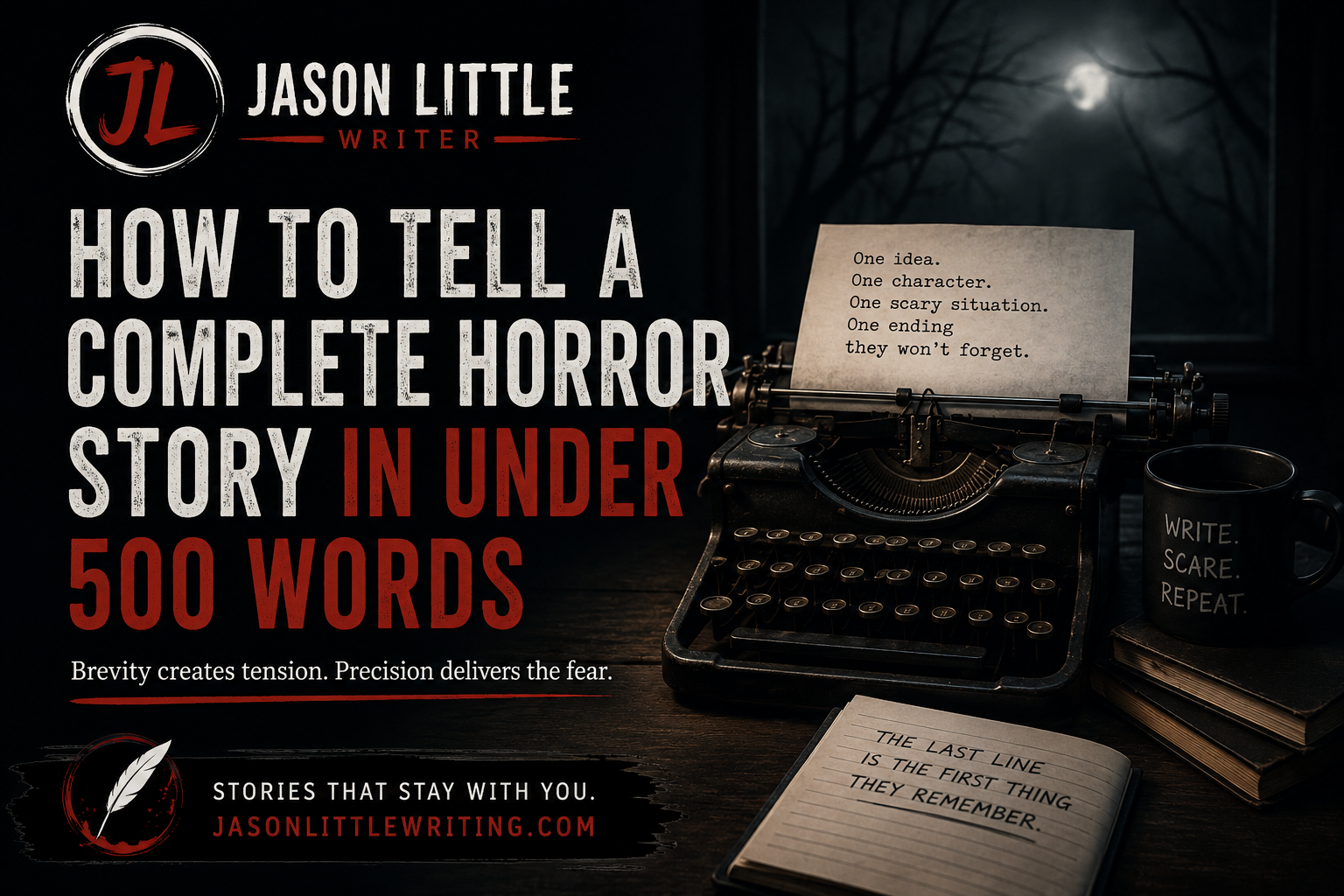
Master brevity to become a more powerful storyteller.
Writing horror in under 500 words is one of the hardest things I've ever challenged myself to do. It's also one of the best exercises I've found for becoming a stronger storyteller.
When I started writing my weekly Flash Frights, I thought the biggest challenge would be fitting a beginning, middle, and end into such a tiny space. I quickly realized the real challenge was deciding what didn't belong. Every sentence had to earn its place.
If you've ever wanted to write flash horror, here are the lessons that have helped me the most.
Start as Close to the Ending as Possible
Longer stories have room to build a world. Flash fiction doesn't.
Instead of introducing your character's entire life, begin just before something changes.
One of my Flash Frights opens with a man standing in a liquor store at two in the morning. I don't spend paragraphs explaining why he's there. Within a few sentences, readers understand enough to continue.
The faster readers understand the situation, the sooner they begin wondering what happens next.
Build Around One Idea
Every successful flash horror story I've written has revolved around a single disturbing concept.
One story asks what would happen if bacon could remember.
Another explores the fear of going to the dentist.
Another imagines a blind dog leading its owners toward something growing on the bark of a fallen tree.
Notice that each story focuses on one central question.
Trying to combine haunted houses, serial killers, demons, cursed objects, and family drama into 500 words usually means none of those ideas receive enough attention.
Give Readers Just Enough
One of the biggest mistakes new horror writers make is explaining everything.
Readers enjoy participating in the story.
If a character hears scratching inside the walls, I don't always reveal what's making the noise. Sometimes the mystery creates more fear than the answer.
One of my favorite novels, The Road by Cormac McCarthy, rarely explains every danger the characters encounter. The unanswered questions create constant tension.
End With a Punch
The final sentence carries more weight in flash fiction than almost anywhere else.
Your ending doesn't need to surprise readers.
It needs to stay with them.
Many of my Flash Frights end by forcing readers to reinterpret everything they just read. The final line becomes the moment they replay the story in their heads.
That's the feeling I chase every Friday.
Read Flash Fiction
The fastest way to improve is by studying writers who already understand brevity.
Reading flash fiction teaches pacing, economy, and structure far better than simply reading about those topics.
Pay attention to how quickly stories establish characters and conflict.
Notice how often they leave readers with one unforgettable image.
Every Word Carries Weight
Writing under 500 words has improved every aspect of my writing.
It has strengthened the novel I’m working on.
It has sharpened my dialogue.
It has taught me to cut scenes that don't move the story forward.
Flash horror isn't just a smaller version of a novel.
It's precision writing.
If you can make readers care about someone in 400 words and leave them unsettled by the final sentence, you'll discover that longer stories become much easier to control.
That's why I'll keep writing Flash Frights every week.